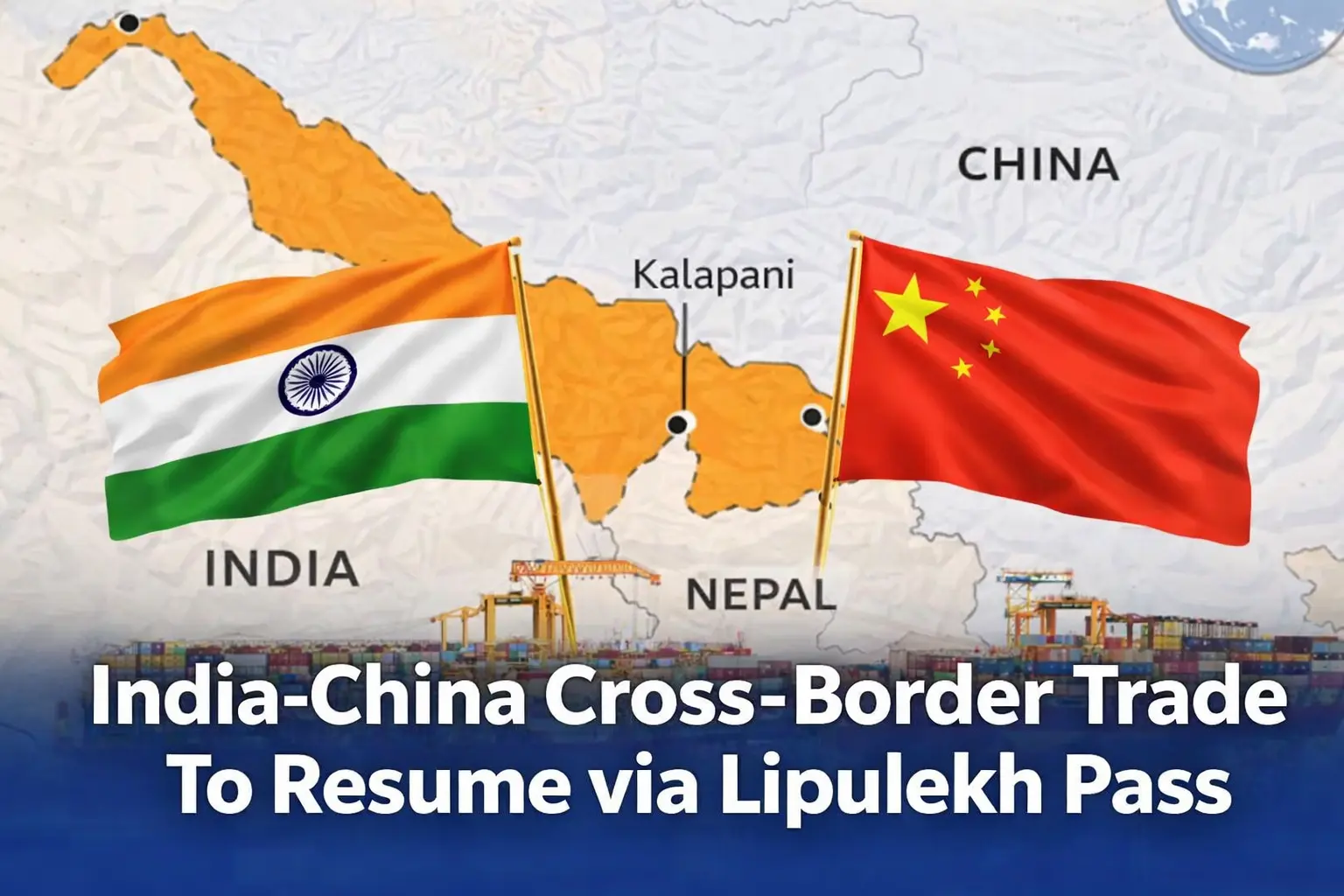
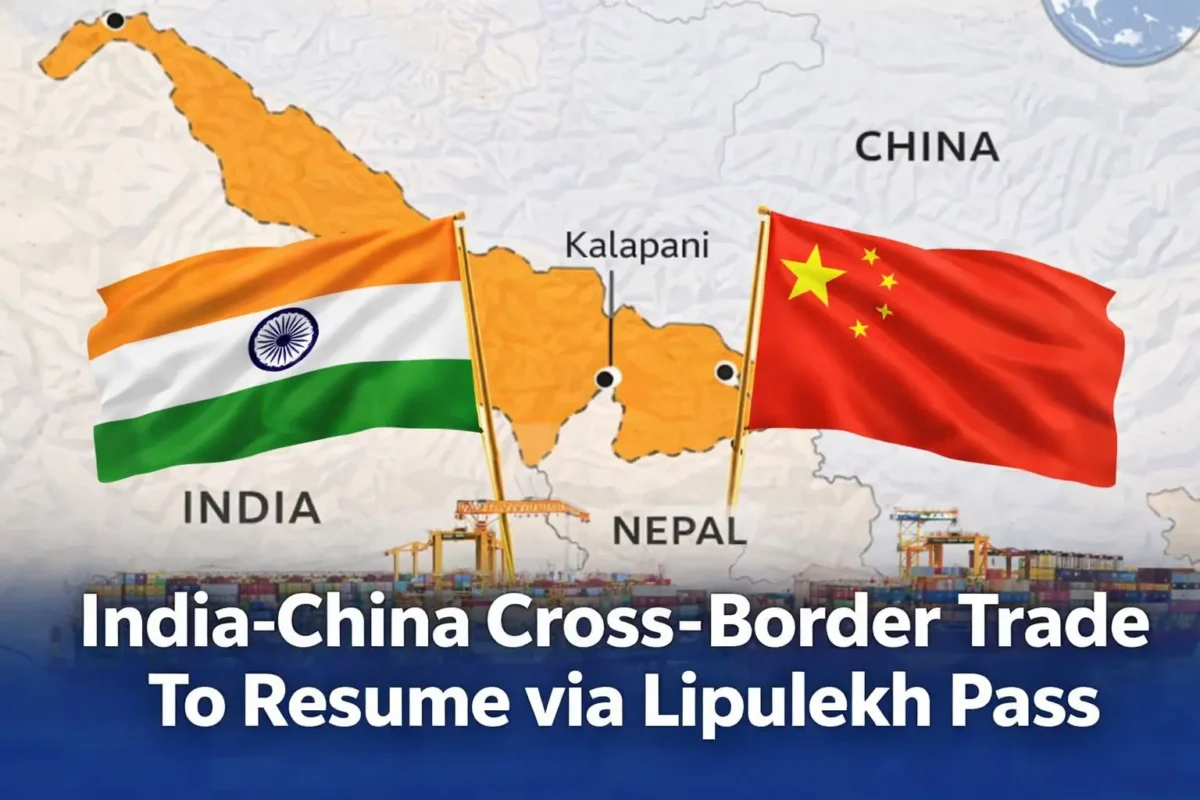
March 22, 2026, official reports indicate that cross-border trade between India and China through the Lipulekh Pass in Uttarakhand’s Pithoragarh district is scheduled to resume this coming June. This reactivation marks a significant restoration of historic economic and cultural exchanges, aimed at revitalizing traditional trade networks within the high-altitude Himalayan frontier. The reopening is set to provide critical socio-economic support to local border communities while facilitating a key gateway to the Tibet Autonomous Region of China.
| Trade Resumption Data |
Category | Details |
|---|
Location/District | Pithoragarh District, Uttarakhand |
Geographical Trijunction | Near the India-Nepal-China trijunction |
Elevation | Approximately 5,334 metres |
Historical Opening Year | 1992 (First Indian border post for China trade) |
Strategic and Historical Dimensions
The Lipulekh Pass represents an ancient artery of commerce that has linked the Indian subcontinent with the Tibet Autonomous Region of China for centuries. In 1992, it attained landmark status as the first Indian border post designated for regulated trade with China, setting a diplomatic precedent for high-altitude cooperation. This historical opening paved the way for the subsequent activation of other strategic corridors, most notably Shipki La in Himachal Pradesh and Nathu La in Sikkim.
The resumption of trade in June 2026 is designed to serve as an immediate economic catalyst for Uttarakhand’s Pithoragarh district. By revitalizing traditional trade networks, the initiative directly benefits the Bhotiya tribes and other indigenous border communities whose livelihoods have historically depended on trans-Himalayan exchange. This development underscores the government’s commitment to improving the socio-economic resilience of these strategically sensitive frontier populations.
Beyond its commercial utility, the reopening reinforces India’s strategic presence along the Himalayan frontier and aligns with broader efforts toward border infrastructure enhancement. The pass remains a critical conduit for the Kailash Mansarovar Yatra, a pilgrimage of profound spiritual significance to Hindus, Buddhists, and Jains. Consequently, the Lipulekh corridor functions as both a vital commercial hub and a primary cultural bridge, ensuring its central role in regional connectivity and stability.
While the strategic outlook points toward increased regional integration, the following section addresses frequently asked questions regarding the operational specifics of the pass.
Frequently Asked Questions
Where is Lipulekh Pass geographically situated?
It is located in the Kumaon region of Uttarakhand, situated near the trijunction where the borders of India, Nepal, and China converge
Why is this pass significant for religious tourism?
The pass is a major route for the Kailash Mansarovar Yatra, a pilgrimage revered by followers of the Hindu, Buddhist, and Jain faiths.
Which other mountain passes facilitate India-China trade? R
Regulated cross-border trade also occurs through the Shipki La pass in Himachal Pradesh and the Nathu La pass in Sikkim.