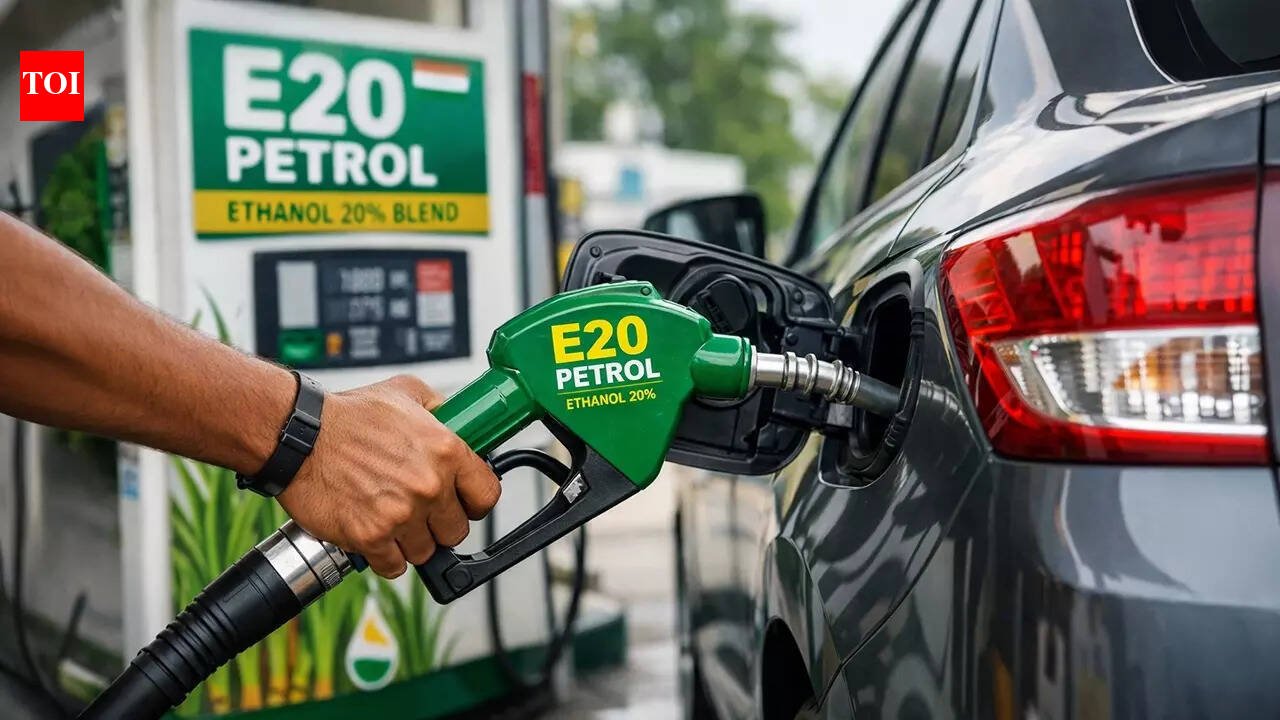
The Indian government has officially mandated the nationwide rollout of E20 fuel, a blend of 20% ethanol and 80% gasoline, effective from April 1, 2026. This mandate requires all petrol pumps across states and union territories to supply fuel with a minimum 95 Research Octane Number (RON) to enhance vehicle performance. The initiative aims to significantly reduce the country’s dependence on crude oil imports while simultaneously lowering carbon emissions.
Quick-Glance Facts
- Organization: Government of India
- Locations: Nationwide (All States and Union Territories)
- Primary Purpose: To reduce oil imports, save foreign exchange, and lower carbon emissions
Important Facts for Exams
- Fuel Composition: E20 is defined as a blend consisting of 20% ethanol and 80% gasoline (petrol).
- Octane Upgrade: The new standard increases the minimum octane rating to 95 RON, up from the previous standard of 91-92 RON.
- Vehicle Compatibility: Vehicles manufactured from 2023 onwards are generally designed to be E20-compliant.
- Economic Impact: The primary macro-economic goals are to save foreign exchange and cut down on crude oil imports.
- Efficiency Variation: Older vehicles may see a reduction in fuel efficiency, specifically a 3–7% decrease in mileage.
Detailed Analysis
Background and Strategic Shift
India’s transition toward ethanol blending has been a phased journey aimed at energy security. By moving from lower blending percentages to a mandatory E20 standard, the government is addressing the high cost of energy imports. This shift is not merely about fuel composition but involves a technical upgrade of the fuel itself, raising the Research Octane Number (RON) to 95. This higher octane level is intended to provide better engine performance and efficiency for modern high-compression engines.
Current Development and Compatibility
As of April 1, 2026, the availability of E20 has moved from a phased city-wise rollout to a standard requirement for every petrol pump in the country. While the infrastructure is now unified, the impact on the national fleet is varied. Vehicles produced in 2023 and later are specifically engineered to handle the corrosive nature of ethanol and the higher octane rating. However, owners of older vehicles are advised to check for compatibility stickers near fuel caps, as these engines were not originally optimized for a 20% ethanol concentration.
Future Implications and Environmental Impact
The long-term goal of the E20 mandate is a cleaner environmental footprint and a more robust economy. By substituting 20% of petrol with domestically produced ethanol, India expects to see a measurable reduction in carbon emissions. While older vehicles may face minor engine wear over time and a 3-7% drop in mileage, the overall transition is expected to stabilize the automotive industry around “green” fuel standards. This move sets a precedent for future bio-fuel integrations in the Indian transport sector.
Frequently Asked Questions (FAQs)
- What is the minimum octane rating for the new E20 fuel?
The fuel must have a minimum of 95 Research Octane Number (RON), which is an increase from the previous 91-92 RON.
- Will E20 fuel affect the mileage of my car?
Modern vehicles (2023+) are designed for it, but older vehicles may experience a 3–7% reduction in mileage.
- When does the E20 mandate become mandatory across India?
The nationwide rollout is mandatory starting from April 1, 2026.
- How can I check if my vehicle is compatible with E20?
You should consult your vehicle owner’s manual or look for a specific sticker located in the fuel filler cap.
Knowledge Check
- What is the percentage of ethanol in the newly mandated E20 fuel?
A) 5%
B) 10%
C) 20%
D) 25%
- What is the primary reason the Indian government is implementing this rollout?
A) To increase the price of petrol
B) To reduce crude oil imports and emissions
C) To phase out all petrol-run vehicles
D) To support the export of ethanol to other countries
- Which vehicles are generally considered E20-compliant?
A) Only electric vehicles
B) All vehicles manufactured after 2010
C) Vehicles manufactured from 2023 onwards
D) Only heavy transport trucks
Answer Key
C) 20%. Source: The text defines E20 as a blend of 20% ethanol and 80% gasoline.
B) To reduce crude oil imports and emissions. Source: The “Purpose” section explicitly mentions cutting imports and reducing carbon emissions.
C) Vehicles manufactured from 2023 onwards. Source: The compatibility section states these vehicles are generally designed to handle E20.